
Handmade in Moss Vale, NSW
Safety Razors & Blades
Double edge safety razors chosen over years of shaving, and the blades to feed them. Two WÖLFE razors, a razor set and DE blades, posted from the studio in Moss Vale, NSW. Not sure which? The guide below picks one for you.
Free shipping over $99-
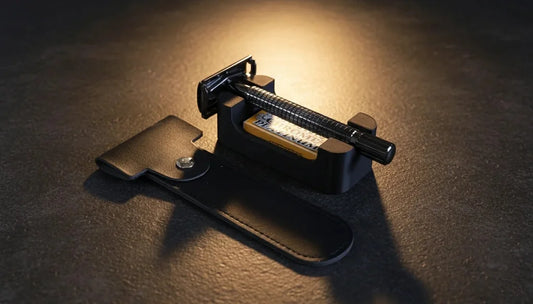
DE Safety Razor Set – Razor, Stand, Blades & Travel Case
Regular price $99.00Regular price$119.00Sale price $99.00Sale -
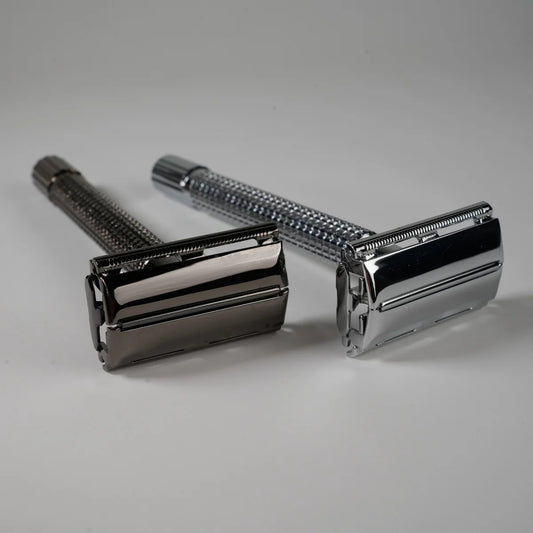
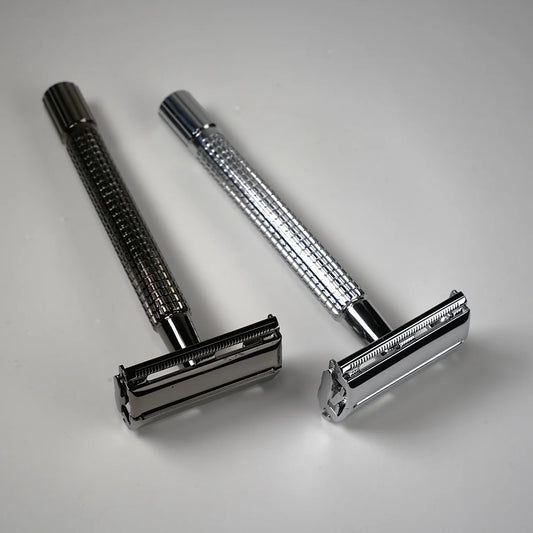
WÖLFE 75 | Butterfly Safety Razor
Regular price $59.00Regular price -
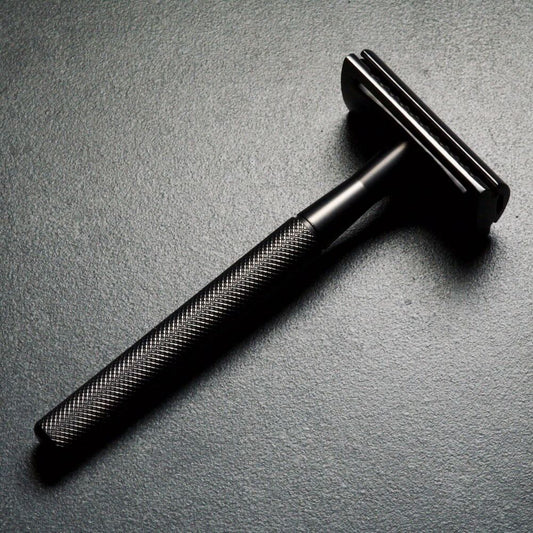
WÖLFE 97 | Double Edge Safety Razor
Regular price $59.00Regular price -
Razor Rest – Safety Razor Stand | Standard & Pro with Blade Storage
Regular price From $20.00Regular price -
Double Edge Razor Blades – Assorted Brands
Regular price From $10.00Regular price

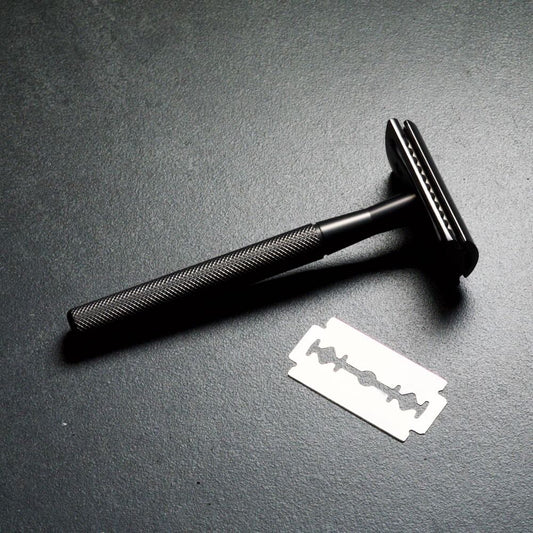

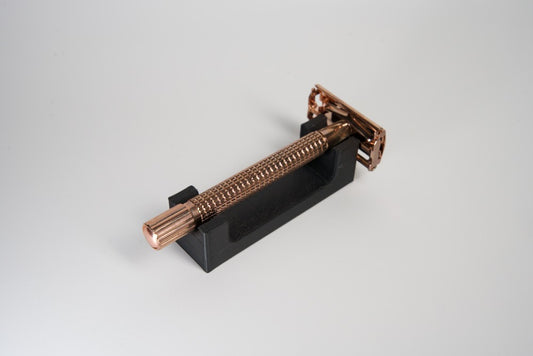
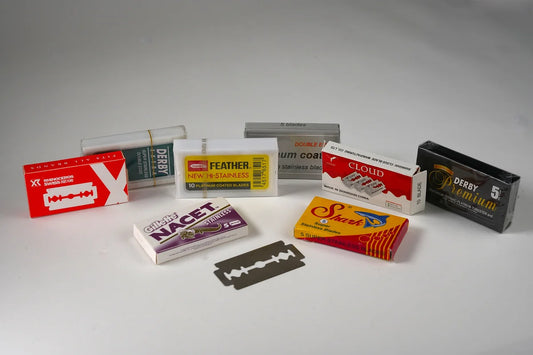
Which one
The buyer's guide
Everything worth knowing before you choose.
Which safety razor should you buy?
There are only three questions that matter, and none of them are about the brand.
1. How much does it weigh?
Weight is the whole trick. A heavy razor presses for you, so you stop pushing it into your face — and pushing is what causes nearly every nick people blame on the razor. If you are coming off a cartridge, go heavy. The WÖLFE 97 is about 97g and is the most forgiving thing we stock. The WÖLFE 75 is about 75g — lighter, nimbler, better once you already have the technique.
2. How do you load the blade?
A three-piece razor comes apart: cap, base, handle. Nothing to break, ever. A butterfly razor twists open at the top and you drop the blade in without your fingers going near an edge — a swap takes seconds. The 97 is three-piece, the 75 is butterfly. Neither is better. One is simpler, one is faster.
3. Do you want it as a set?
If it is a first razor or a gift, the DE Safety Razor Set at $99 puts the razor, a stand, blades and a travel case in one box, so there is nothing left to work out.
Still weighing it up? Best Safety Razor in Australia 2026 compares the two head to head, and Safety Razor for Beginners starts further back than that.
Is shaving with a safety razor better?
For most faces, yes — and the reason is boring. One sharp blade cuts the hair once, at the surface. A cartridge drags three to five blades over the same stroke, and the first ones tug the hair up out of the follicle so the later ones cut it below the skin line. That is what an ingrown hair is. Fewer blades, fewer passes, less irritation.
The other half of it is that the blade is not the expensive part. A DE blade costs about 20 cents and gets swapped every five to seven shaves. A cartridge costs several dollars and you stretch it because of the price, which means you are shaving with a blunt blade — the actual cause of most razor burn.
The honest caveat: a safety razor asks for a bit of technique for the first fortnight. See Safety Razor vs Cartridge Razor for the full comparison, including where the cartridge genuinely wins.
What "single blade" actually means
One blade, zero plastic waste, and replacement blades that cost cents instead of dollars. A single blade cuts the hair at skin level rather than pulling it proud and cutting below the surface, which is what causes most ingrown hairs with a multi-blade cartridge. "Single blade" gets used for three different tools, though — double edge, single edge and shavette — and only one of them is a good first razor. The full explanation, who each suits, and the honest downsides are in our guide to single blade shaving.
What are the downsides of a safety razor?
Three real ones, and we would rather say them here than have you find out.
- It takes about two weeks to learn. No pressure, roughly a 30° angle, short strokes, and go with the grain first. That is the whole technique, but your hands need a fortnight to believe it.
- It is slower. Add two or three minutes. Some people find that is the best part of the morning; some people are late for work.
- It will not follow a jawline the way a pivoting cartridge does. Under the nose and around the chin need a little care.
Nicks in the first fortnight are near-universal and almost always caused by pressing. Heavier razor, lighter hand. How to Shave with a Safety Razor walks it through.
Why did people stop using safety razors?
Nothing went wrong with the razor. The blade stopped being the product.
A DE blade fits every DE razor ever made, which means nobody can lock you into their refills. From the 1970s the industry moved to proprietary cartridges — a cheap handle, expensive refills that only fit that handle, and the marketing budget to sell more blades per cartridge as progress. The safety razor did not lose on performance. It lost because it could not be turned into a subscription.
Which is also why it came back. Every blade we sell fits every razor we sell, and it always will.
What is the best safety razor in Australia?
For a first razor, the one with weight behind it. In our range that is the WÖLFE 97 at $59 — three-piece, about 97g, and forgiving enough that most people get through the first month without a mark. If you have shaved with a DE before and want a lighter, quicker razor, the WÖLFE 75 at $59 loads a blade in two seconds.
Beyond that, spending more on a safety razor buys finish and adjustability, not a closer shave. The two things that actually change your shave are a fresh blade and a proper lather — which is why a $59 razor with good soap beats a $250 razor with a can of foam every time.
Full write-up: Best Safety Razor in Australia 2026 — WÖLFE 97 vs WÖLFE 75.
Which blades, and how many?
Every double edge blade in the world is the same size. Any DE blade fits any DE razor, including both WÖLFE razors. Brand changes the sharpness and the smoothness, not the fit.
Skin and beard differ enough that there is no universally best blade, so start with an assorted pack from $10 — BIC, Swiss Rhino, Cloud and Dorco — run each for a few shaves, then buy 100 of whichever one disappeared fastest. A hundred blades is $90 and lasts most people well over a year.
More detail in Safety Razor Blades Explained — DE, SE & How to Choose.
What you need besides the razor
The razor is the part people research and the smallest part of the result. A single blade needs a lather that actually holds water under it, and that is the half we make ourselves in Moss Vale.
- Artisan shaving soap from $29.95 — handmade here, and the biggest single upgrade to a safety razor shave.
- A shaving brush from $69 — lifts the hair and works lather into it rather than laying foam on top. Every brush is turned by hand and ships with its stand.
- A shaving bowl from $35 — solid teak, rare Huon pine, or matte black polymer printed in the studio.
- Shave oil from $29.95 — under the lather if your skin runs sensitive.
- Razor Rest stand from $20 — keeps the razor upright and drying, which is how the finish survives.
Or take it as one box: the shaving kits run from $99 to $499 and pair a razor with a handmade brush, bowl, stand and soap.
Do safety razors work for women?
Same razor, same blades. Legs, underarms and the bikini line are exactly where cartridge razors cause the most ingrown hairs, and a single blade cutting at the surface is what stops them.
Two things worth knowing. Larger areas want a heavier razor, so the WÖLFE 97 is the pick over the lighter 75. And a wet shower floor is the one place to be careful — shave sitting down for the first few goes, and keep a lather under the blade rather than shaving off water.
Yes, people use them for pubic hair. Go slowly, with the grain, and keep the skin taut.
Where do used blades go?
Not in the bin loose, and not in the recycling loose. Used DE blades go into a sealed blade bank until it is full, then the whole sealed tin goes to scrap steel.
The Blade Bank at $20 is designed and made in the studio: a one-way slot, no lid, nothing that can spill in a drawer or cut a hand in a rubbish truck. The Razor Rest Pro at $25 does the same job in the base of the stand.
Full method, including what to do with a jar you have already filled: How to Dispose of Razor Blades in Australia.